-
ご注文履歴に関する重要なお知らせ | お客様アカウントのプラットフォームのアップデートに伴い、アカウント内の表示内容が一部変更されるほか、一部の過去のご注文履歴が表示されなくなります。 -
国産木刀製造業の危機 | 木刀や杖などの国産木製武器製造について、ブログ記事を掲載しました。現在、宮崎県都城の国産木製武器製造については、職人減、良質な木材資源の減少、国内外からの受注過多などにより、以前に比べ、安定した木製武器の製造が大変厳しいものになっています。その現状について、詳しくご紹介しています。 -
商品レビュー投稿キャンペーン ★ | レビューをご投稿頂いたお客様全員に、次回からのお買い物で使える「5%OFFクーポン」をプレゼント致します。
縁頭・居合刀&真剣
平均点数: 5/5 -
レビュー数: 6
About our Fuchi/Kashira lineup
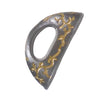
The Fuchi (縁) is a hilt collar between the tsuka and the tsuba. It serves as a reinforcment for the Tsuka (handle). The tang of the sword goes into the tsuka through the opening in the fuchi.
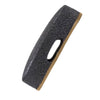
The Kashira (頭) is a pommel on the end of the tsuka, which serves, similarly to the Fuchi, as reinforcement for the Tsuka (handle). It usually features a hole that is used to secure the tsukaito (wrapping). Some kashira, and notably Suigyu (water buffalo) made Kashira do not have a hole, which forces to slightly change how the maki (wrapping) is done.
As other pieces and components of the sword mounting, the Fuchi and Kashira used to be simple and plain, but became thoroughly decorated and worked during the Edo period, developing into decorative ornaments over time.
Fuchi and Kashira design have two main features: the shape and the engraved design. Although many kind of shapes exist, the two most common shapes are "Jidai" and "Higo". Jidai that could be translated as "classic" refer to a flat Kashira, and Higo, which was an ancient province of South Japan, refer to a rounded Kashira (which was typical of Higo swords).
Note that the Tsuka length is measured from the tip of the Kashira, which makes the Tsuka length slightly vary depending on the Kashira shape.
Fuchi and Kashira come in pair and their design is usually (almost always) are based on the same thematic.
All models are, of course, entirely handmade in Japan.
並び替え:
-
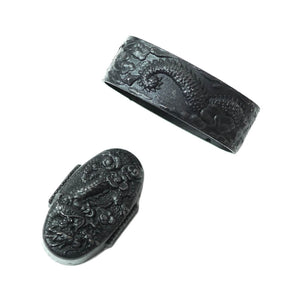
龍図 縁頭 - FKM100
¥7,000
純日本製
材質&仕上げ:アルミニウム製
縁:39 mm x 22 mm x 14 mm
頭:34 mm x 19 mm x 11 mm
デザイン:龍
居合刀・真剣用
-
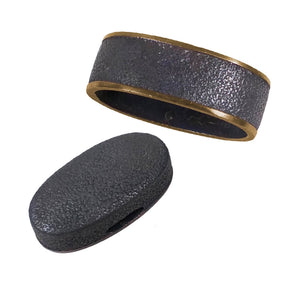
石目図 縁頭 - FKM101
¥13,000
純日本製
材質&仕上げ:真鍮製
縁:40 mm x 23.5 mm x 13 mm
頭:37 mm x 19.5 mm x 10.5 mm
デザイン:石目
居合刀・真剣用
-
-
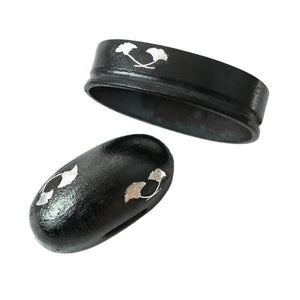
肥後銀杏図 縁頭 - FKM103
¥38,000
純日本製
材質&仕上げ:鉄製
縁:40 mm x 23 mm x 11 mm
頭:35 mm x 18 mm x 13 mm
デザイン:伝統的な肥後デザイン。金属の上に金や銀の象嵌が施されています。
居合刀・真剣用
-
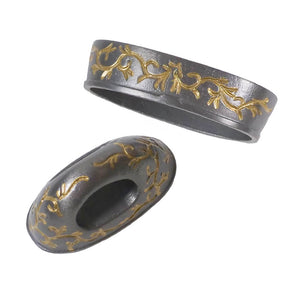
肥後唐草図 縁頭 - FKM105
¥15,000
純日本製
材質&仕上げ:真鍮製 金象嵌
縁:41 mm x 23 mm x 10 mm
頭:35 mm x 18 mm x 16 mm
デザイン:伝統的な肥後デザイン、アラベスク模様
居合刀・真剣用
-
-
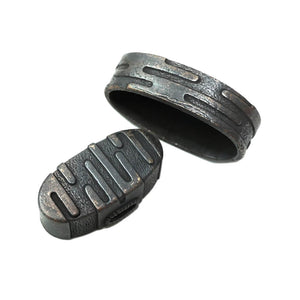
柳生霞図 縁頭 - FKM106
¥14,000
純日本製
材質&仕上げ:真鍮製
縁:40 mm x 22 mm x 11 mm
頭:35 mm x 17 mm x 10 mm
デザイン:古典的な柳生スタイル、霞
居合刀・真剣用
-
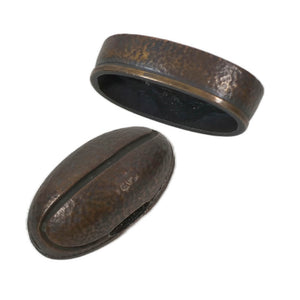
武蔵 縁頭 - FKM107
¥13,000
純日本製
材質&仕上げ:真鍮製
縁:~41 mm x ~23 mm x ~10.5 mm
頭:~35 mm x ~18 mm x ~12 mm
デザイン:武蔵の刀の縁頭セットのレプリカ
居合刀・真剣用
-
-
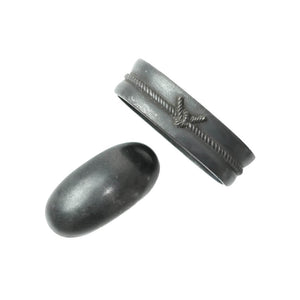
肥後縄図 縁頭 - FKM108
¥13,000
純日本製
材質&仕上げ:真鍮製
縁:42 mm x 23 mm x 11 mm
頭:35 mm x 18 mm x 13 mm
デザイン:伝統的な肥後デザイン、しめ縄がテーマ
居合刀・真剣用
-
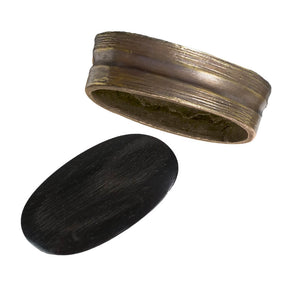
天正図 縁頭 - FKM109
¥22,800
純日本製
材質&仕上げ:真鍮、水牛の角製
縁:40 mm x 24 mm x 10 mm
頭:36 mm x 21 mm x 7 mm
デザイン:古典的な天正スタイル。頭は本物の水牛の角、縁は真鍮製。
居合刀・真剣用
-
-

倶利彫図 縁頭 - FKM110
¥18,000
純日本製
材質&仕上げ:真鍮製
縁:41 mm x 25 mm x 12 mm
頭:37 mm x 20 mm x 11 mm
デザイン:伝統的な倶利彫
居合刀・真剣用
-
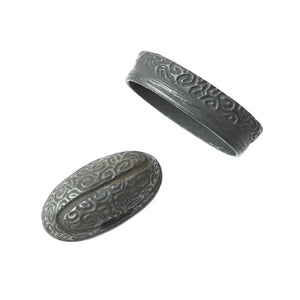
肥後石目図 縁頭 - FKM111
¥22,000
純日本製
材質&仕上げ:鉄製
縁:40 mm x 21 mm x 095 mm
頭:35 mm x 18 mm x 11 mm
デザイン:石目パターンを用いた伝統的な肥後デザイン
居合刀・真剣用
-
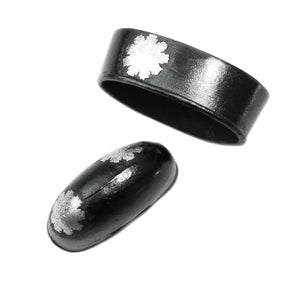
肥後雪花図 縁頭 - FKM113
¥50,000
純日本製
材質&仕上げ:鉄製
縁:40 mm x 23 mm x 13 mm
頭:36 mm x 17 mm x 18 mm
デザイン:伝統的な肥後デザイン、雪片がテーマ
居合刀・真剣用
-
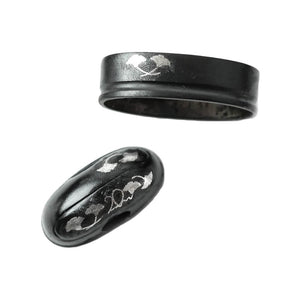
肥後銀杏唐草図 縁頭 - FKM118
¥52,000
純日本製
材質&仕上げ:鉄製
縁:40 mm x 23 mm x 11 mm
頭:35 mm x 17 mm x 13 mm
デザイン:銀杏の葉とアラベスク模様を描いた伝統的な肥後デザイン
居合刀・真剣用
-
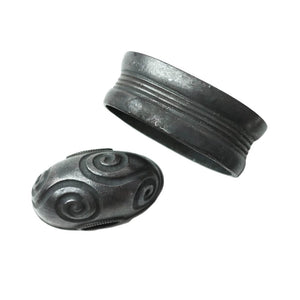
肥後倶利彫図 縁頭 - FKM120
¥15,000
純日本製
材質&仕上げ:真鍮製
縁:43 mm x 26 mm x 16 mm
頭:37 mm x 20 mm x 17 mm
デザイン:倶利彫を施した伝統的な肥後デザイン
居合刀・真剣用